Free Will: The Freedom to Choose, The Responsibility to Answer
Do we truly have free will? And if we do, what does that make us responsible for? My take on choice, circumstance and accountability.
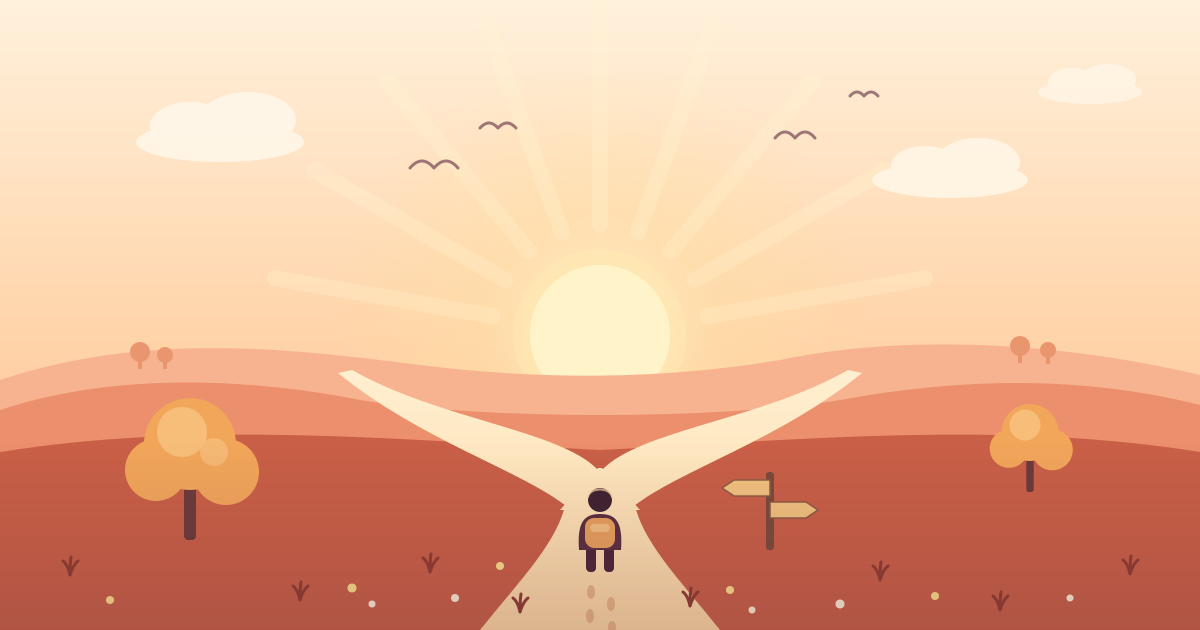
Do we truly have free will? And if we do, what does that make us responsible for?
Before answering that, I think we first have to understand freedom. The essence of free will is our ability to exercise freedom through choice.
Let’s take a simple example.
You wake up one morning and feel thirsty. You get out of bed, walk to the kitchen, grab a glass, fill it with water and drink it.
What’s so special about that?
Look at it again. You wanted to.
You had a desire, recognised it, made a decision and acted on it. Nobody forced you to drink that glass of water. You simply chose to.
That’s freedom in its simplest form, and it’s where free will comes into the picture.
The ability to choose
Free will, as I understand it, is our ability to choose between different courses of action.
- You can choose to help someone or walk past them.
- You can choose to tell the truth or lie.
- You can choose to build something meaningful or destroy something someone else worked hard to create.
The important part isn’t what you choose. It’s that you can choose.
And here’s where things get interesting: the same freedom that lets one person do something incredibly good lets another do something incredibly evil.
A person can dedicate their life to helping others, building hospitals or feeding the hungry. Another can use their abilities to exploit, manipulate and inflict suffering. Both are exercising their ability to choose.
Free will doesn’t make us good. It gives us the ability to decide what we want to become.
Circumstances don’t define us. Our choices do.
This is the part of free will I find most important.
We are all born into different circumstances. Some of us grow up surrounded by love and support, others in poverty, neglect or violence. We don’t choose where we’re born, who our parents are or what environment raises us.
But does that mean our circumstances must dictate who we become?
I don’t think so.
Consider two people who grow up in violent households.
- One grows up to perpetuate the same violence.
- The other recognises the suffering they’ve experienced and consciously chooses never to inflict it on someone else.
Similar circumstances. Different choices. The second person could have continued the cycle, but chose not to.
I’m not saying circumstances don’t influence us. Of course they do. But being influenced by something doesn’t mean surrendering your ability to choose how you respond to it.
You can experience hatred without choosing to hate. You can experience cruelty without choosing to become cruel. Your circumstances might explain where you come from, but they don’t dictate where you go.
We aren’t merely products of our past. We are also the choices we make in response to it.
With freedom comes accountability
This is where the conversation around free will becomes particularly important.
If we have the freedom to choose, shouldn’t we also be accountable for what we choose?
When we do something good, we’re happy to take the credit. We acknowledge our effort, our decisions, our actions. But when we do something wrong, suddenly everything becomes about our circumstances: our upbringing, our environment, our past.
Those things can explain our behaviour. Should they automatically excuse it?
I don’t think so.
I’ll admit I’m wary of how convenient the denial of free will can be. That doesn’t make it wrong, because a theory isn’t false just because it’s comfortable. But if every decision we make is simply the inevitable result of everything that came before, it’s fair to ask what taking responsibility for our actions even means.
There are genuine philosophical arguments against free will, and I don’t want to dismiss them. Still, I personally believe we have the capacity to make choices, and that we must own them.
We can’t celebrate human freedom when it produces something good and then dismiss human agency when it produces something terrible. That would be rather convenient, wouldn’t it?
Freedom isn’t the absence of consequences
Having free will doesn’t mean being free to do whatever we want without consequences. Your freedom to choose doesn’t give you permission to violate someone else’s.
If you choose to hurt someone, you should be held accountable. That you were free to make the decision doesn’t make the decision acceptable.
A society where everyone demands freedom but nobody accepts responsibility wouldn’t be a very pleasant place to live. Freedom and responsibility go hand in hand.
So, what do we do with our freedom?
I believe free will exists. I believe we’re capable of making choices, and that those choices shape not only our own lives but the lives of the people around us.
We don’t get to choose every circumstance we’re born into, or control everything that happens to us. But we do have a say in how we respond.
Perhaps that’s the most important thing about free will. We spend so much time defending our right to choose, yet how often do we talk about the responsibility that comes with it? We want the freedom to make our own decisions, but are we equally willing to answer for them?
We have the freedom to choose. What we choose to do with it is on us.